Understanding Industrial Piping Solutions for Demanding Applications
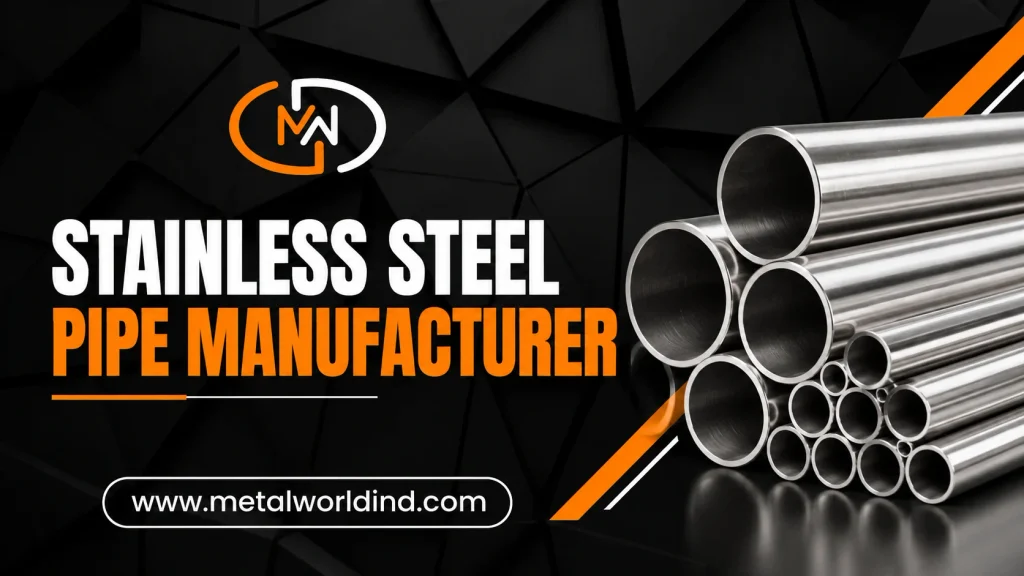
Industrial piping systems are important for transporting gases, liquids, steam, chemicals, and different other materials for various sectors. Selecting the right pipe is important to maintain safety, durability, long-term performance, and operational efficiency. A trustworthy stainless steel pipe manufacturer can offer piping products that are being designed based on wall thickness, application requirements, dimensions, and material grades.
Industrial projects need more than standard piping products. Selection of piping products can be carried out on different factors, including pressure, mechanical stress, installation conditions, and corrosion exposure. Alloy steel, nickel alloys, specialty metals, and carbon steel are usually assumed during the time of developing piping systems.
This blog explores the important characteristics of industrial pipes and tubes, the role of material selection, differences between seamless and welded products, and the factors businesses should consider when sourcing piping solutions for specialised applications.
Selecting Materials for Reliable Piping Performance
Material selection is an aspect of designing industrial piping systems. Various metals offer a variation of corrosion resistance, temperature tolerance, strength, and durability. Stainless steel is commonly chosen for applications where sanitation, resistance, and strength to environmental conditions are vital.
Several stainless steel grades are available for different requirements. 347, 904L, 202, 304, 304H, 3-4L, 316, 317, 317L, 310, 347, and 904L are a few options of the stainless steel grades. Suitable grade relies on mechanical and chemical conditions and on the operating environment.
Specialised alloys can offer advantages where normal stainless steel may seem to be insufficient. Super duplex steel, bronze, aluminium, brass, copper, titanium, monel, inconel, nickel, monel, inconel, nickel, and Hastelloy can be utilised for industrial requirements.
The suitable selection can be helpful for enhancing service life and preventing premature deterioration of the piping network. Due to this reason, specifications are required to be analysed carefully in advance of purchasing pipes to use in industrial projects.
Seamless and Welded Pipes for Different Requirements
Pipe manufacturing methods can have an effect on the product characteristics. Seamless pipes are being produced without the longitudinal welded seam, whereas welded pipes are being manufactured by joining metal in a tubular shape. Welded pipes and seamless pipes are appropriate, relying on the intended application.
Seamless products are also considered for such applications, which often require integrity and the ability to work in severe operating conditions. Welded pipes in the meantime can offer practical solutions for different applications where specifications, needed dimensions, and operating conditions are appropriate.
Requirements of industrial piping vary from one project to another. A few installations may need large-diameter pipes, whereas others may rely on small-diameter tubes for instrumentation and specialised equipment.
The available product range can include pipes up to 36 inches nominal bore, with seamless and welded options available. Wall thicknesses may range from Schedule 5S to Schedule XXS, allowing buyers to select products according to pressure, structural, and installation requirements.
Choosing Dimensions and Wall Thickness Carefully
Dimensions are just as important as material composition when selecting an industrial pipe. Outside diameter, nominal bore, wall thickness, length, and dimensional tolerances all influence how a product integrates with an existing system.
A pipe that does not match the required specifications can create installation difficulties, connection problems, or unnecessary modifications. Therefore, engineering teams should establish dimensional requirements before placing an order.
Tubes can also be supplied in specialised dimensions for applications that require compact or precision-oriented components. Depending on the product category, tube outside diameters can begin from approximately 0.5 mm, while wall thicknesses can start from around 0.2 mm.
Such dimensional flexibility can make piping systems suitable for a broad range of industrial applications, from large-scale process infrastructure to smaller specialised assemblies.
Corrosion Resistance for Challenging Environments
Corrosion can significantly affect the service life of piping systems, particularly in environments involving chemicals, moisture, saltwater, high temperatures, or aggressive fluids. Selecting a suitable material can therefore help protect the piping system from premature degradation.
Stainless steel provides useful corrosion-resistant characteristics for numerous applications, while specialised nickel alloys can be considered for environments where more demanding resistance is required. The selection should always be based on the actual operating conditions rather than simply choosing a material based on general popularity.
Industries such as chemical processing, marine operations, offshore facilities, and power generation may encounter conditions that require careful material evaluation. A suitable combination of alloy composition, pipe design, wall thickness, and manufacturing method can contribute to dependable performance.
Specialised Nickel Alloy Piping for Harsh Conditions
Industrial environments look for materials offering a combination of resistance towards corrosive conditions and mechanical strength. Nickel-based alloys can offer an alternative solution to the usual steel piping.
For projects looking for nickel-alloy products, you may work with the Monel seamless pipe exporter in case of a requirement for international sourcing. Monel alloys are valued for their resistance to several corrosive environments and can be considered for applications where material performance is a major concern.
When evaluating these products, buyers should pay attention to:
- Material grade and chemical composition
- Required pipe dimensions and wall thickness
- Seamless manufacturing requirements
- Applicable technical specifications
- Corrosion and temperature conditions
- Inspection and quality documentation
- Packaging and transportation requirements
A well-defined specification helps ensure that the selected piping product is appropriate for the intended service conditions. It can also simplify communication between engineering teams, procurement departments, and suppliers.
Monel 400 Piping for Industrial Applications
Monel 400 is another material that may be considered for applications requiring corrosion resistance and mechanical strength. Its characteristics can make it suitable for certain marine, chemical, processing, and industrial environments where ordinary materials may not provide the desired performance.
When sourcing this material in a particular region, working with a Monel 400 pipe supplier Chennai can provide access to products suited to project-specific requirements. However, buyers should evaluate more than material availability when selecting a supplier or product.
Important considerations can include:
- Required Monel 400 specifications
- Pipe dimensions and wall thickness
- Seamless or welded construction
- Surface finish requirements
- Dimensional tolerances
- Inspection procedures
- Testing and documentation
- Delivery requirements
These considerations can help buyers select piping products that align with engineering drawings and operating conditions rather than making decisions solely on price or availability.
The Bottom Line
Industrial piping systems require careful consideration of materials, manufacturing methods, dimensions, wall thicknesses, and operating conditions. From stainless steel and alloy steel to specialised nickel-based materials, each option can serve different engineering requirements. Seamless and welded configurations provide flexibility for projects with varying performance and installation needs.
For businesses seeking dependable industrial piping solutions, Metal World brings together a broad selection of pipes and tubes across stainless steel, carbon steel, alloy steel, Monel, nickel, Inconel, Hastelloy, duplex and other materials. Our product range includes different sizes, forms, wall thicknesses, and seamless or welded configurations. As a stainless steel pipe manufacturer, we can support projects requiring carefully specified piping solutions for diverse industrial applications.