Metallurgical Integrity and Manufacturing Standards for Industrial Fittings
Industrial piping carries severe corrosives, extreme heat, and high pressures. The manufactured fittings must adhere to total compliance with the integrity of the material, proper design and dimensions, and testing regulations. Stainless steel butt weld pipe fittings are being used in many industries, such as chemical, petrochemical, and pharmaceutical industries. Thus, it is important to understand ASME and ASTM requirements for selecting piping components that are resistant to corrosion.
This guide describes the importance of design compliance, manufacturing tolerances, heat treatment, forging practices, pressure testing, and material documents in terms of reliability of the fittings being produced. In addition, some aspects of compression fittings, Monel material, titanium fittings, and high-alloy piping systems are discussed.
Material Selection for Corrosion-Resistant Fittings
Matching Materials to Service Conditions
The choice of materials is one of the main aspects when it comes to creating industrial fittings. Factors like temperature, pressure, exposure to chemicals, composition of the fluid in question, and corrosion impact the right alloy that should be chosen for a specific application. A number of stainless steel grades are suitable for use in various combinations of corrosion resistance and operational parameters.
In respect to the choice of material, a reputable compression fittings manufacturer should also think about the mechanical and metallurgical properties of that material. In spite of the differences in the connection methods, compression fittings and butt weld fittings can be used in applications even when none of them requires any problems with the quality of manufacture and choice of materials.
Documentation and Material Traceability
The validation of material documents has a significant role in quality assurance. The material test report verification process for high alloy pipe fittings requires a verification process, which involves checking the validity of provided documents against the ordering specification and the relevant standard of the material. The review process will cover the material grade, heat number, chemical composition, mechanical properties, heat treatment conditions, and test report.
Traceability provides assurance to the buyers that the installed material meets the required grade, especially in the case of high-cost materials, such as nickel-based alloys, duplex stainless steels, super duplex steels, Monel, and titanium.
Manufacturing Practices for Industrial Pipe Components
Precision Across Different Fitting Types
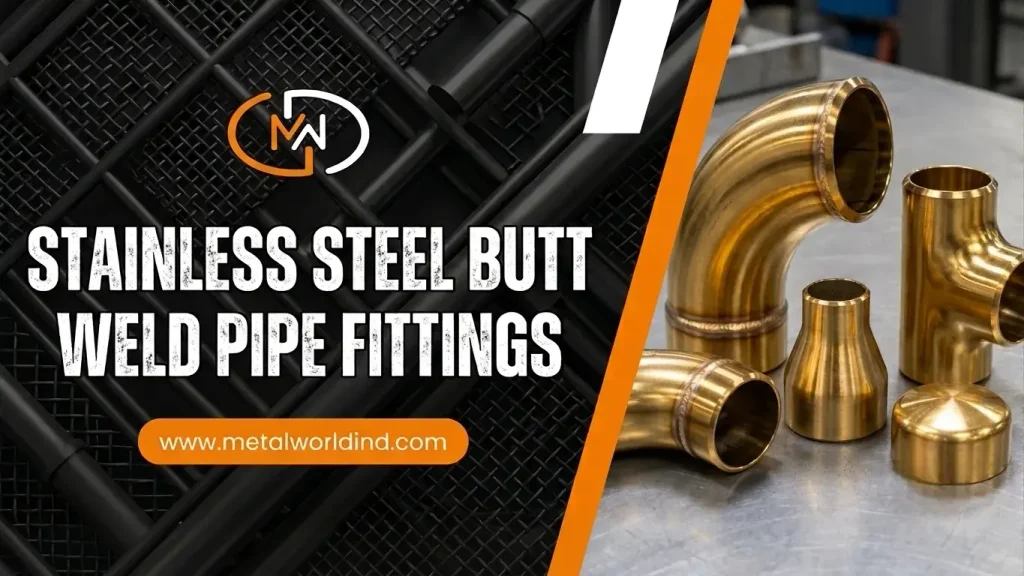
There are various types of industrial fittings created according to what the piping system requires. Butt weld products may include elbows, tees, reducers, return bends, stub ends, caps, collars, crosses, and inserts.
For stainless steel pipe fittings manufacturers, it is essential to keep in mind the dimensional control when producing the fittings, as the shape of the pipe fitting is crucial for ensuring smooth alignment and welding of the piping system. The manufacturers must take the external diameter, wall thickness, length between the two ends, angle of the pipe fitting and its overall shape into consideration when producing it.
Forging and Pressure-Boundary Considerations
For the forged components, the design parameters of forged compression fittings pressure boundary design criteria must take into account the target pressure, temperature, strength of material, shape, and connection configuration. The design must withstand the working pressure and possess the necessary sealing and mechanical characteristics.
When dealing with corrosion-resistant alloys, manufacturers should control the temperatures and methods of forming. Improper processes can lead to problematic issues like grain structure loss, degradation of mechanical properties, loss of corrosion resistance, or lack of dimensional stability. In case of critical applications, heat treatment and inspection should be carried out in accordance with the appropriate material and product specifications.
Controlling Dimensional and Metallurgical Quality
Maintaining Manufacturing Tolerances
Dimensional consistency is essential for ensuring that fittings can be integrated correctly with pipes and other components. ASTM A403 stainless steel butt weld fittings manufacturing tolerances help to guarantee dimensional values and make sure that the quality of the produced wrought austenitic stainless steel piping is high.
In practice, both manufacturers and clients should check the relevant specification as per the order. Dimensional examination consists of the measurement of ASTM B366 Monel pipe fittings heat treatment and forging specifications the outside diameter, wall thickness value, length of the shape, angle, preparation of its ends and so on. Consistent tolerances play a huge role in reducing difficulties while installing the fittings as well as ensuring that the fittings are well-fitted before welding.
Heat Treatment and Alloy Integrity
The impact of heat treatment on stainless steel and nickel-alloy components and products should be taken seriously. The technology influences the characteristics such as microstructure, hardness, and mechanical and corrosion resistance. Therefore, the production process should comply with the requirements applicable to the grade of the material and the specification of products.
As for nickel alloy items, the specifications of are taken into consideration when assessing wrought nickel and nickel alloy products. In this case, the necessary requirements should be verified regarding the relevant ASTM specifications, grades of materials, dimensions, and order specifications.
Testing and Verification for High-Alloy Components
Chemical Composition and Material Testing
Through chemical analysis, it can be confirmed whether an alloy adheres to its specified grade or not. Elements like chromium, nickel, titanium, molybdenum, carbon, and other such constituents affect the corrosion resistance and mechanical property of the alloy.
ASTM B363 titanium pipe fittings chemical composition testing standards are useful for the assessment of both wrought titanium and titanium alloys used in the fabrication of fittings. Depending on the specification and purchase requirement, testing and certification may be applied to confirm that the supplied material meets the required chemical and mechanical specifications.
Inspection programs that are comprehensive consist of chemical analysis, mechanical testing, inspection of dimensions and visual inspection, and document verification.
Hydrostatic Pressure Testing
Pressure testing provides another layer of quality verification for pressure-containing piping components. Hydrostatic pressure testing procedures for industrial pipe fittings generally involve filling the component or test assembly with an appropriate test medium, removing trapped air where required, applying the specified test pressure, and inspecting for evidence of leakage or other unacceptable conditions.
The parameters of the test pressure, duration, testing setup, acceptance requirements, and safety regulations should always be established in accordance with the relevant code, product specification, engineering criteria, and project documents.
For high-specification installations, testing should be supported by appropriate records so that inspection teams can establish what was tested, under which conditions, and against which acceptance criteria.
Selecting a Reliable Industrial Fitting Partner from the Market
A supplier with access to a range of material grades can help businesses find components well-suited for industrial environments. For example, Metal World provides a wide variety of connection types and sizes.
This can be useful in cases where compatibility, requirements, and connection design vary from one piping project to another. We are known for providing stainless steel, carbon steel, alloy steel, Monel, nickel, Inconel, Hastelloy, duplex, super duplex, titanium, copper, brass, bronze, and other materials within our fitting range.
Some of the criteria buyers have to keep in mind while selecting stainless steel pipe fittings manufacturers are the company’s quality control system, product traceability, manufacturing capabilities, inspection activities, and documentation support. The same criteria are useful when sourcing specialised products from a Monel pipe fittings supplier, where alloy identification and manufacturing principles are essential.
Conclusion
The capability of corrosion-resistant piping systems tends to be influenced directly by the quality and structure of their elements. From stainless steel butt weld pipe fittings and forged products to Monel and titanium components, each fitting must be selected and manufactured according to the rising demands of the intended service environment. ASTM material specifications, ASME requirements, dimensional controls, heat treatment, pressure testing, chemical analysis, and material traceability all contribute to dependable piping performance.
For buying these different components, you can look forward to Metal World offering fitting configurations and a wide spectrum of materials, sizes, and wall thicknesses with those relevant components to meet industrial needs. To get more information on the different criteria and components, you can contact our team.